
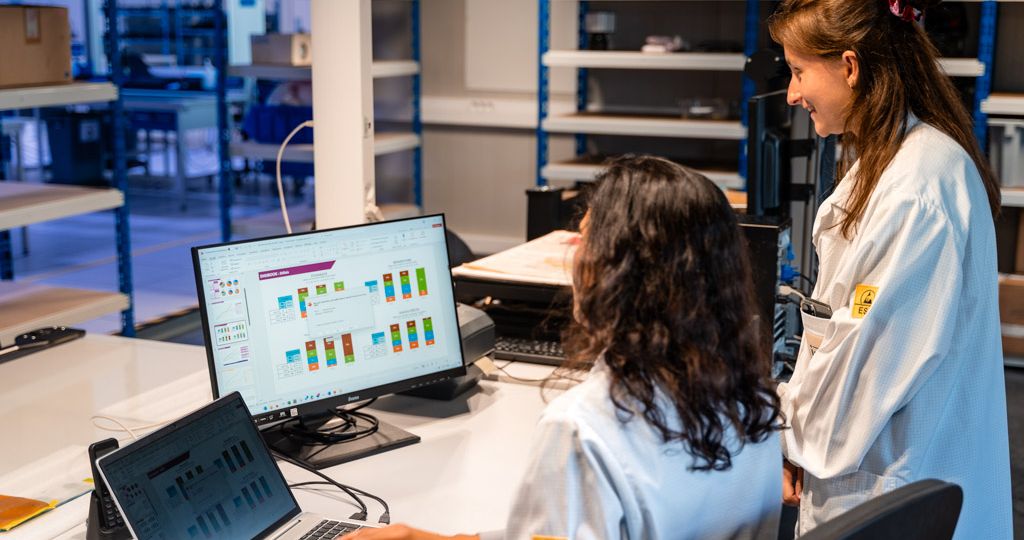
Industry is often associated with machines, workshops and assembly lines. Yet behind every industrial product lies a much broader chain of expertise. From the emergence of an idea to its launch on the market, a wide range of roles contribute and work together.
In a technology-driven SME such as i2S, this diversity is particularly visible. Every product that leaves the company is the result of collective work, bringing together teams with a wide range of expertise.
The Idea: Understanding the Market and Imagining the Product
It all starts with identifying an opportunity. Marketing and sales teams analyze customer needs, technological developments and market trends.
These observations lead to ideas for new products or improvements to existing solutions. Marketing then translates market expectations, intended uses and initial requirements into a clear framework. This step helps ensure that a technical innovation addresses a real market need.
Design: Turning an Idea into a Technical Solution
Once the opportunity has been confirmed, the project is handed over to the engineering team. Engineers and technicians work to turn the initial idea into a concrete technical solution.
They design the product architecture, develop components, build prototypes and test their performance. This phase often involves numerous adjustments to achieve a solution that is reliable, high-performing and compatible with industrial constraints.
Project management also plays a key role at this stage. Project managers coordinate the different teams, monitor progress and ensure that cost, timeline and performance objectives are met.
Industrialization: Preparing for Manufacturing
A functional prototype is not enough: it must also be possible to manufacture it consistently and cost-effectively.
Industrialization teams define manufacturing processes, assembly methods, required tools and quality control procedures. Their role is to turn a technical innovation into a product that can be manufactured at scale, while ensuring quality and keeping costs under control.
Procurement and Logistics: Securing the Supply Chain
Even before production begins, the availability of the required components must be ensured.
Procurement teams identify suppliers, negotiate lead times and place orders. Their role is essential to prevent shortages that could disrupt the manufacturing process.
Logistics teams then organize the receipt, storage and delivery of components to production. Incoming inspections are also carried out to verify that received components meet the required specifications.
Production: Bringing the Product to Life
Once all the necessary elements are in place, manufacturing can begin.
Production technicians assemble the products, carry out tests and make the necessary adjustments. Production managers organize the work, manage workflows and ensure compliance with quality standards.
This is the stage where the product becomes a tangible reality.
Preparing for Launch: Bringing the Product to the Market
While production is being set up, marketing and communications teams prepare the product for market launch.
They define the product positioning, create presentation materials, write documentation and build visibility through professional events and trade shows. Their goal is to translate technical features into clear, meaningful benefits for users.
Sales teams also prepare to introduce the product to customers.
Sales and Customer Relations
Once the product has been launched, sales teams develop the market, identify new opportunities and support customers throughout their projects.
Sales administration teams manage orders, coordinate with production and oversee deliveries. They play a central role in ensuring a smooth relationship between the company and its customers.
Support Functions: An Essential Foundation
Throughout the entire process, support functions contribute to the company’s smooth operation.
Human Resources teams recruit talent, support skills development and contribute to employees’ quality of work life.
Finance and accounting teams manage the company’s financial operations, oversee investments and help maintain its financial stability.
Other functions, such as IT, legal and general services, also contribute to the organization’s day-to-day operations.
Although they may be less visible within the production chain, these functions provide an essential foundation for the success of industrial projects.
A Collective Effort
The example of an industrial SME shows that industry is about much more than manufacturing. It relies on a wide variety of professions: engineers, technicians, logistics specialists, sales teams, communications professionals, financial experts and HR specialists.
Each contributes in their own way to a shared goal: turning an idea into a useful, high-performing product that delivers value to its users.