
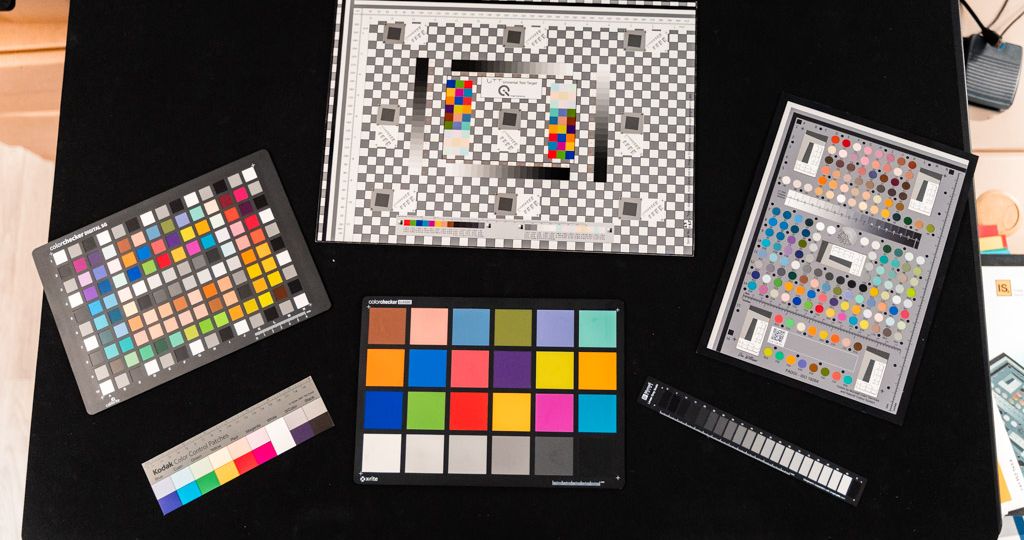
Every year, millions of heritage documents are digitized worldwide. Yet producing a “simple image” is no longer enough. In a preservation project, the digital image becomes the ultimate reference. The slightest technical flaw, poorly exposed manuscripts, approximate sharpness, or color deviations, can lead to irreversible information loss.
Today, the challenge is no longer simply to digitize, but to ensure that every digitized image is faithful, measurable, and reproducible. This is where quality control and the application of international standards come into play.
INTERNATIONAL STANDARDS: FROM VISUAL PERCEPTION TO OBJECTIVE MEASUREMENT
For a long time, what constituted a “good quality” image remained subjective. Today, institutions rely on three strict international frameworks to assess image captures: FADGI, ISO 19264, and Metamorfoze.
Each standard brings its own technical sensitivity, making them highly complementary. FADGI (Federal Agencies Digital Guidelines Initiative), developed in the United States, stands out for its pragmatic approach based on a star-rating system ranging from 1 to 4 stars. Meanwhile, Metamorfoze, the Dutch national program for documentary heritage preservation, is historically recognized as the pioneer of strict tolerances, specifically designed for archives, manuscripts, and books. Finally, the international standard ISO 19264 was introduced to harmonize and synthesize these different approaches by unifying measurement methods and providing a standardized global framework. Rather than excluding one another, these standards work together, sharing the same physical foundations of imaging to guarantee absolute fidelity to the original document.
These standards make it possible to evaluate the accuracy of digitization according to precise criteria that must be rigorously monitored at every stage of the process. The analysis begins with color accuracy, which measures the deviation (the well-known Delta E) between the captured image and the real object. Sharpness and resolution are then assessed to ensure that even the finest details are captured without blur. Geometric accuracy and distortion control ensure faithful proportions and the readability of the smallest annotations without generating artificial artifacts. Quality control also requires perfectly uniform lighting across the entire digitization surface to avoid shadows, along with careful management of digital noise.
To meet these requirements, two pillars become essential: rigorous equipment calibration to align the system with the reference thresholds defined by the standards, and continuous quality control to validate the stability of that alignment over time.
THE WORKFLOW TRAP: TIME LOSS AND TECHNICAL RISKS
In practice, many institutions still face a major obstacle: fragmented software environments. In many cases, calibration, image capture, and quality control rely on separate applications.
This break in the production chain first results in a significant loss of productivity, as operators waste valuable time switching between interfaces, exporting files, and repeating tedious operations. Furthermore, multiplying software tools considerably increases the risk of technical errors, whether through configuration inconsistencies or overlooked settings between applications.
This fragmentation complicates workflows and exposes institutions to high reprocessing costs: if equipment drift caused by lighting or environmental conditions is detected too late, hundreds of images may need to be rescanned, once again putting precious originals at risk. The conclusion is clear: when calibration and quality control processes are perceived as too complex and time-consuming, many institutions eventually abandon them altogether.
UNIFYING CALIBRATION AND QUALITY CONTROL: THE FUTURE OF HERITAGE WORKFLOWS
To meet today’s production demands without compromising compliance with standards, centralizing tools is gradually becoming the natural evolution of heritage digitization workflows. Integrating calibration and quality control within a single software environment improves both reliability and operational efficiency.
Optimized Operational Fluidity
By eliminating constant switching between software tools, operators can refocus on what truly matters: handling heritage documents and ensuring digitization quality. Technical checks become naturally integrated into the workflow, making production smoother and more secure.
Drift Detection
An all-in-one solution makes it possible to regularly verify whether captures comply with the thresholds defined by FADGI, ISO, or Metamorfoze standards. Deviations related to lighting, focus, or color rendering can therefore be identified much earlier during production, before they impact an entire digitization campaign.
Full Project Traceability
Analysis reports are generated automatically and are natively linked to the digitization project. For heritage institutions commissioning the work, this guarantees a fully documented and verified delivery process from start to finish, in accordance with industry best practices.
TOWARD SUSTAINABLE DIGITIZATION
Quality control can no longer be considered a simple end-of-project formality. It is the beating heart of responsible and sustainable heritage digitization.
As production volumes continue to increase, unifying tools is no longer a convenience, it is an operational necessity. This is precisely why our solution, Quality by Digibook, integrates calibration and quality control based on international standards into a single workflow, designed to simplify operators’ work while ensuring the compliance and reliability of your heritage digitization projects.